
Green Cards Through Marriage
Marriage to a U.S. citizen is sometimes referred to as the “fast track” to lawful permanent residence. The spouse of a U.S. citizen is deemed an “immediate relative” under the law meaning that there are no quota restrictions on the number of people who can obtain green cards through marriage to U.S. citizens.
The U.S. citizen starts the process by submitting a form I-130 visa petition on behalf of their foreign-born spouse. If the spouse entered the U.S. lawfully, he/she can file for adjustment of status (I-485 packet) without having to leave the U.S. Generally, the spouse receives an Employment Authorization Document (EAD) within 90 days, and may also be eligible for an Advance Parole document to travel abroad.
If the foreign-born spouse entered the U.S. without inspection, he/she may have to apply for a green card abroad. They may, however, be eligible to apply for a provisonal waiver in the United States.
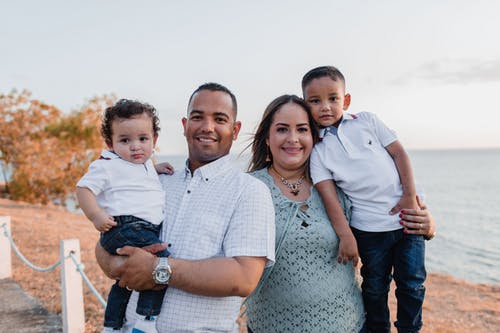
To obtain a green card, your marriage must be bona fide. This is a lot easier to prove if there is a wedding reception where the U.S. citizen spouse’s parents and relatives are present, where the couple has joint property and files joint income tax returns and especially if the couple has a child together.
If the marriage is less than two years old when the green card is granted, it will have a two-year time limit. The couple must submit form I-751 during the 90-day prior before the expiration of the green card in order for the foreign-born spouse to obtain a ten-year green card. If the couple divorces before the end of the two-year period, the foreign-born spouse must use form I-751 to apply for a “good faith marriage waiver” of the joint petition requirement.
Please view our video about How to Obtain a Green Card Through Marriage before you get married and before you submit any paperwork to the USCIS.
If you have a two-year green card, but are separated or divorced, see our video I-751 Waiver Where Marriage Ends in Divorce.
“With the invaluable help of Carl Shusterman’s team my wife and I fulfilled our dream of being together after being apart for several years. The immigration process is a very delicate matter and the paperwork needs to be presented properly, and when it is about being with your loved ones, you should only let the best in the business handle your case.” (More client reviews…)
Green Cards Through Marriage is divided into the following subtopics:
- General Information
- How-To Videos
- Success Stories
- Selected Federal Courts Cases Involving Marriage to U.S. Citizens
- Getting Your Green Card through Marriage
Related Pages:
GENERAL INFORMATION
- Would You Pass the Immigration Marriage Exam?
- How Do I Help My Fiance Become a Permanent Resident? (USCIS)
- Immigrant Visas for Spouses of a U.S. Citizen (State Department)
- Guidance Regarding Surviving Spouses of Deceased U.S. Citizens & Their Children – USCIS (12-02-09)
HOW-TO VIDEOS
- How to Obtain a Green Card Through Marriage
Immigrants who marry U.S. citizens are considered “immediate relatives”. If they entered the U.S. lawfully, they may apply to adjust their status to permanent resident in the U.S. even if they are not currently in legal status.
- Emigrar por Matrimonio a un Ciudadano Americano
Personas de origen extranjero que ingresan en un matrimonio de buena fe con un ciudadano de los EE.UU. se consideran “familiares inmediatos” a los efectos de la obtencion de Residencia.
- 美國結婚移民
外國出生的人在與一名美 國公民建立一個真正的婚 姻后可被歸類為“直近的 親人” 而獲得綠卡。在這部影片 中,卡爾舒斯 特曼,前移民局檢察官 (1976 年至 1982), 其律師事務所近 30年來已幫助成千上萬的人 在美國 成為永久居民,將為您解 說基本的過程。
- 결혼을 통한 영주권 취득
외국에서 태어나 미국 시민권자와 진실한 결혼을 한 사람들은 영주권 취득 절차상 “가까운 친척들”로 간주됩니다. 이것은 쿼타 제한에서 그들을 자유롭게 하고, 그들이 미국에 거주하고 있는 경우, 영주권자로 자신의 신분을 바로 조정할 수 있게 합니다.
- I-751 Waiver Where a Marriage Ends
in Divorce
If your marriage to a U.S. citizen has ended before 2-year expiration date of your green card, you must submit an I-751 waiver. You should seek the assistance of an attorney.
SUCCESS STORIES
- Getting a Green Card in Juarez (The Hard Way) (February 2013)
- Green Card Granted to Abandoned Spouse (July 2012)
- Spouse of U.S. Citizen – Easy Case? Read On! (February 2012)
- Wife of Air Force Sergeant Escapes Immigration Nightmare (August 2011)
- Saving a Divorcee from Deportation (January 2010)
- Bringing a Deported Spouse Back to the U.S. (April 2009)
- Rules of Engagement: Obtaining a Green Card for a Fiance (the Hard Way) (October 2006)
SELECTED FEDERAL COURTS CASES INVOLVING MARRIAGE TO U.S. CITIZENS
- Singh vs. Holder, No. 07-73792, (9th Cir. 2010) – Court Has Jurisdiction to Consider Whether “Extreme Hardship” Exists in I-751 Waiver Petition
- Choin vs. Mukasey, No. 0675823p (9th Cir. 2008) – Divorce Occurs Before Foreign-Born Spouse Obtains Green Card
- Freeman vs. Gonzalez, 444 F.3d 1031 (9th Cir. 2006) – Where Death of U.S. Citizen Occurs Before Foreign-Born Spouse Obtains Green Card
GETTING YOUR GREEN CARD THROUGH MARRIAGE
Each year, over 400,000 citizens of the United States marry foreign-born persons and petition for them to obtain lawful permanent residence in the U.S. Spouses of U.S. citizens are considered “immediate relatives” under U.S. immigration law and are exempt from all numerical quota limitations. In other words, marriage to a U.S. citizen is the fast lane to a green card.
Alternately, marriage to a lawful permanent resident is very problematical and often results in the recently-married spouses living apart for two years or more. A legislative solution to this problem is required.
Battered spouses and children of U.S. citizens and lawful permanent residents are entitled to special benefits under the law.
It is also possible for a U.S. citizen to obtain a temporary visa for a fiance and get married once he or she arrives in the U.S.
IF THE MARRIAGE OCCURS IN THE U.S.
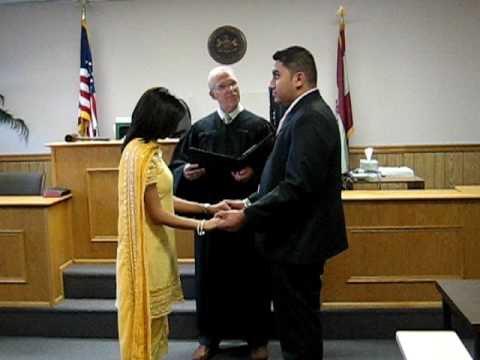
Procedurally, the process works as follows. The U.S. citizen must submit a visa petition (Form I130) to the National Benefits Center in Chicago to prove that the marriage is bona fide, that is, entered into for love rather than simply for the foreign-born spouse to obtain a green card. Attached to the visa petition are the following items: (1) Biographical forms (Forms G-325) for both the husband and the wife with photos attached; (2) Proof of the citizenship status of the petitioner (This can take the form of a U.S. Passport, a Certificate of Naturalization or Citizenship or a certified copy of the citizen’s birth certificate); (3) A certified copy of the marriage certificate; (4) Certified copies of the documents that terminated any previous marriages of the husband or wife including final divorce decrees, and certificates of annulment or death.
Simultaneously, the foreign-born spouse, assuming he or she entered the U.S. lawfully, should submit an application for adjustment of status (Form I-485) which is an application for a green card. Items which generally accompany form I-485 include green card photographs, an affidavit of support from the spouse (Form I-864), an application for employment authorization (Form I-765), an application for a travel permit (Form I-131) known in USCIS jargon as “advance parole” – assuming that the non-citizen spouse has not be present in the U.S. unlawfully for 180 days or more – and numerous other USCIS forms.
And don’t forget to include a check for the USCIS filing fees which will be in excess of $1,300.
The USCIS will accept the applications, cash your check, and schedule an interview within a few months. If the wait for the interview exceeds 90 days, chances are that the work card and the travel permit will be issued. We link to the USCIS Processing Times for all 80+ District and Sub-Offices.
IF THE MARRIAGE OCCURS OUTSIDE THE U.S.
The immigration process is similar except that traditionally the foreign-born spouse had to remain in his or her country until he or she obtained a green card. This changed on August 14, 2001 when temporary K-3 and K-4 visas became available and allowed the spouse and children of U.S. citizens to obtain temporary visas to come to the U.S. and process the paperwork in the U.S.
The immigration process begins when the citizen spouse submits a visa petition to either the USCIS office which has jurisdiction over his residence or directly to the U.S. Embassy or Consulate in the country where the foreign-born spouse resides. The citizen spouse must attach the same items with the visa petition which are listed above including the filing fee.
Once the visa petition is approved, the foreign-born spouse will receive a packet from the US National Visa Center (NVC) located in Portsmouth, New Hampshire. The packet informs the foreign-born spouse of the various documents which must be presented at the immigrant visa interview abroad (e.g., passport, police clearances, results of medical examinations, etc.). The packet includes certain documents requesting biographic data which must be completed, signed and forwarded to the U.S. Embassy or Consulate abroad.
Usually, the foreign-born spouse is interviewed and granted an immigrant visa within three to six months. The State Department charges a fee for an immigrant visa.
Sometimes, in order to avoid a lengthy separation, the spouses return to the U.S. after the marriage and proceed to file the necessary applications once they are both in the U.S. Usually, USCIS takes a dim view of this practice. It is not uncommon for the CBP to stop the foreign-born spouse at the border and exclude him or her from the U.S. as an intending immigrant. However, if the foreign-born spouse is able to enter the U.S., USCIS will not deny his or her application for a green card solely because he or she entered the U.S. on a temporary visa when their real intent was to remain permanently in the U.S.
REMOVING CONDITIONAL RESIDENCE
If the marriage is less than two years old when the foreign-born spouse becomes a permanent resident, the green card will expire after a two-year period. Both spouses must submit a joint petition (Form I-751) to remove the two-year condition within the 90-day period immediately preceding the end of the two year period.
If the marriage has terminated by reason of divorce, death of the citizen spouse or spousal abuse, the foreign-born spouse may apply for a waiver of the joint petition requirement at any time before the end of the two-year period.
On April 10, 2003, the USCIS issued a policy memorandum entitled Filing a Waiver of the Joint Filing Requirement Prior to Final Termination of the Marriage which states that a person who has obtained lawful permanent residence based upon a marriage to a U.S. citizen can not submit an application for a waiver of the joint petition requirement based on the “good faith” marriage exception to the joint petition requirement until the person has obtained a final dissolution of the marriage.
On April 3, 2009, the USCIS issued a memorandum entitled “I-751 Filed Prior to Termination of Marriage” which explains how USCIS examiners should treat I-751 joint petitions and request for waivers of the joint petition requirement where the couple has separated and/or is undergoing divorce proceedings.
On October 9, 2009, the USCIS issued a memorandum entitled “Adjudication of Form I-751…Where the CPR has a Final Order of Removal, Is in Removal Proceedings, or has Filed an Unexcused Untimely Petition or Multiple Petitions.”
On December 23, 2012, the USCIS issued an “interim” memorandum entitled Revised Guidance Concerning Adjudication of Certain I-751 Petitions which would amend the October 9, 2009 memo.